
Secretary of State Marco Rubio just gave the defining speech of his career. At the Munich Security Conference, Rubio addressed our European allies and laid out the America First agenda as an invitation to Europe, based on our shared Western values and culture, to join us in protecting those values, God, and progress, rather than politely managing the West's decline.
The whole speech is worth watching or reading in full:
It was significant for how clearly it laid out what an America First foreign policy looks like, and how different that looks from the mealy mouthed liberal apologetics of the Biden and Obama eras. Rubio’s vision was nationalist, religious, and fiercely committed to putting Americans above all else.
But it was also significant for its rejection of the more hard-line anti-Europe rhetoric that’s come out of some other corners of the MAGA movement—perhaps most significantly Vice President JD Vance. Rubio was carving out a path between the foreign interventionist hawks of the pre-MAGA GOP on the one hand, and the far-Right isolationists on the other, falling right smack in the middle where, perhaps not coincidentally, is where you’d probably find most Americans.
Rubio began by lauding the cooperation between Europe and America that led to the downfall of the Soviet Union and the triumph of the West. Unfortunately, Rubio went on, “the euphoria of this triumph led us to a dangerous delusion”—that every nation would now be a liberal democracy and nationhood would be replaced by trade and commerce. Instead of national borders, we would live in an international order defined by the free flow of goods and humans, “a world without borders where everyone became a citizen of the world.”
This fantasy was always just that, and since the downfall of the Soviet Union, it curdled, destroying communities through deindustrialization and mass migration “that threatens the cohesion of our societies, the continuity of our culture, and the future of our people.”
Rubio’s diagnosis of the problem plaguing the West right now is not new or unique; it’s why President Trump was elected—to stop the decline of our working- and middle class, indeed, of our nation as a whole, brought on by open borders and free trade. It’s what Rubio said next that made the speech so unique:
“We made these mistakes together, and now, together, we owe it to our people to face those facts and to move forward, to rebuild.”
Rubio was not there to attack or European allies, not to shame or to blame them, but to invite them to understand what the American people understood when they voted for Trump, and to join us in a shared project to save our shared values from a slow decline into oblivion.
As Rubio put it,
“For the United States and Europe, we belong together. America was founded 250 years ago, but the roots began here on this continent long before. The man who settled and built the nation of my birth arrived on our shores carrying the memories and the traditions and the Christian faith of their ancestors as a sacred inheritance, an unbreakable link between the old world and the new.

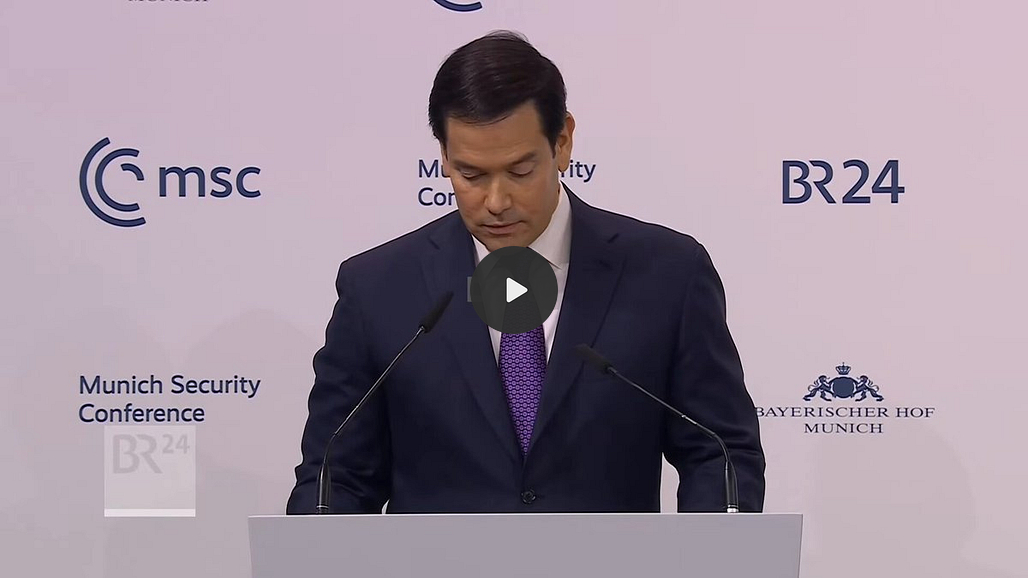
We are part of one civilization – Western civilization. We are bound to one another by the deepest bonds that nations could share, forged by centuries of shared history, Christian faith, culture, heritage, language, ancestry, and the sacrifices our forefathers made together for the common civilization to which we have fallen heir.”
This shared religion, culture, heritage, language, and civilization, is why President Trump cares so deeply about the fate of Europe, despite what can be the abrasiveness of his comments, Rubio said: “We are connected spiritually and we are connected culturally. We want Europe to be strong.” And to be strong, our allies must be proud, not “shackled by guilt and shame. We want allies who are proud of their culture and of their heritage, who understand that we are heirs to the same great and noble civilization, and who, together with us, are willing and able to defend it.”
This part is key to President Trump’s understanding of allyship. For decades, being an ally of the United States meant being dependent on the largesse of the American taxpayer. It meant the U.S. essentially subsidizing NATO while Europe sneered at us and spent its money on expanding its welfare state. It meant America handed over billions in aid and rather than asking what we are getting in return, the “soft power” theory seemed to posit that the dependence itself was the goal, our share of the bargain.
America handed over billions in aid and rather than asking what we are getting in return, the “soft power” theory seemed to posit that the dependence itself was the goal, our share of the bargain.
Trump rejected all of that. He doesn’t want weak allies. He wants strong allies who bring something to the table we can’t accomplish on our own. We can’t—nor should we—be in the position of protecting the entire West from our adversaries. That’s why Trump speaks harshly sometimes: He wants the Europeans, “our cherished allies and our oldest friends,” as Rubio called them, to do better.
The speech was a tour de force, exactly the tough love Europe needs to hear, judging by the Davos speeches made by so many of their feckless leaders. As I put it at the time, Europe is for them; Trump is for you:
That’s what we really saw in Davos—a split screen for the ages: Sneering European leaders doubling down on all the policies that destroyed the West and the working class, and Donald Trump showing the world what it looks like to put your own people first.
What’s amazing is that Rubio laid out this vision in a way that was almost enticing. Rather than berating the Europeans, he explained the problems they must recognize in a way most likely to have resonated—and then he presented a solution designed not to troll them or shame them but welcome them to a new and exciting future in which these problems can be solved.
He used persuasion, based on shared values, admiration, and even love.
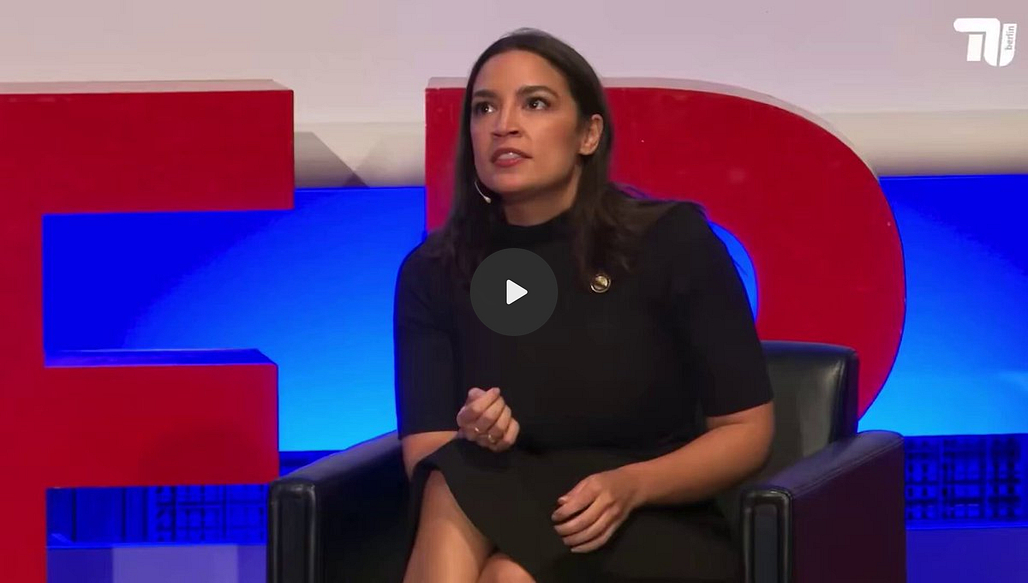
Of course, not all Americans are on board. New York Congresswoman Alexandria Ocasio-Cortez is already doing her best to slam him for making a “pure appeal to Western culture”—though why this is a bad thing, she wasn’t quite able to articulate.

But Rubio’s speech also stands in stark contrast to the one given by Vice President JD Vance exactly one year ago at the same conference. Vance used the opportunity to issue a scalding rebuke of Europe, telling the audience that
the threat that I worry the most about vis-a-vis Europe is not Russia, it’s not China, it’s not any other external actor. What I worry about is the threat from within. The retreat of Europe from some of its most fundamental values: values shared with the United States of America.
He excoriated the UK and other allies for not respecting the free speech of their citizens, and spent much of the speech on mass migration, as well as alleging that the "basic liberties of religious Britons, in particular" were massviely under threat.
The speech felt like it was written as pure red meat for the MAGA base, more podcast appropriate than world stage material.
But in the year since, it’s clear President Trump’s foreign policy is not a purely isolationist one. There’s a complexity to it, a maturity that is absent from its most extreme emissaries. As the President often says, it’s peace through strength—and that means having strong allies for burden sharing.
That’s the vision Rubio laid out on Saturday in a way that amazingly might even have managed to persuade those least likely to want to hear it.
Having previously listened only to clips, at your urging I listened to the entire speech. It’s been a long time since we’ve had an American leader able to articulate credibly and without apology a vision for our Western allies. Intelligent, inclusive, scholarly. I hope it’s not too late.
Agree about Rubio‘s brilliance, but it was basically the same policy and the same message as JD Vance’s , just wrapped in a beautiful package of shared understanding, values and heritage – – which of course was the backdrop last year as well for JD Vance. I would say that we have just watched a bad cop/good cop routine. If Rubio had made this speech last year the Euros wouldn’t have listened. Now they are relieved. JD Vance placed great emphasis on protecting freedom of speech, but Rubio doesn’t need to speak about that this year because he has already implemented a policy of turning back travelers to the United States if they have engaged in censorship in Europe.