
Like many Americans, I’ve been watching FX’s wildly popular Love Story, about the doomed John F. Kennedy Jr. and 90’s-Era-It-Girl Carolyn Bessette Kennedy, which aired its final episode on Thursday. Their story ended in tragedy in 1999, when a plane John was flying crashed into the ocean outside Cape Cod.
The show has become a cultural phenomenon; the first five episodes racked up 25 million hours of viewing, setting a streaming record. Women across New York are prancing around in black and white basics, camel coats, tortoiseshell headbands, and slim oval sunglasses in a bid to replicate Carolyn’s signature style, while men have been gathering for JFK Jr. look alike competitions.
It’s not hard to see why: Bessette and Kennedy were both fashion icons, fixtures in the tabloids whose tumultuous romance played out in a time so many of us feel nostalgia for, in the context of a family whose personal tragedies intersected with and at times even defined American history. What was it like to be inside that story, inside that couple, so persistently photographed? What did it feel like, what did they talk about, what drew them to each other beyond the beauty, fame, glamour, and celebrity?
Not much, is the show’s answer. According to Love Story, these people didn’t have much depth beneath their personal styles, didn’t have many thoughts beyond how they were being perceived, possessed nothing as epic as the gorgeous soundtrack would suggest, beyond the epic proportions of their bickering. The topic they discuss most throughout the show, to the near exclusion of everything else, is the fact of their celebrity—the constant presence of the paparazzi, the Kennedy clan’s expectations of them, how many parties to attend, and how to deal with the incredible burden of being a Kennedy.
And in that sense, the show may be more true to life than a more effective mythologizing might have been. In other words, Love Story’s myopia is one of its most redeeming qualities.
When John crashed his plane into the ocean outside Cape Cod, he killed not just himself and his wife, but Carolyn’s sister, Lauren, who was in the plane with them. That’s one Kennedy, two Bessettes. And from the minute the sisters’ mother, Ann Messina Freeman, appears on screen, played by the wonderful character actress Constance Zimmer, you know what’s coming: This woman is about to lose two of her daughters. Would the show do that loss justice? I found myself wondering. Or would the objectively greater suffering of the only Normie character left be eclipsed by that of the Kennedys’?
Freeman’s grief is given its due. She is given the space to express and thus underline what the show successfully depicted—how her daughter’s life, which was once full and fun and bright and joyful, was redefined and eclipsed by her relationship with John John. And because of Carolyn’s premature death, her marriage would be all she’d be remembered for.
I love this show because it (perhaps inadvertently) exposed the pretensions of a myth that some haven’t yet realized is dead.
The show is about John and Carolyn, but it’s also very much about what it meant to be a Kennedy back in the day. And one of Love Story’s strengths is the way in which it constantly seems to be putting before the viewer the question of whether these people, these Kennedys, were deserving of all the attention they got. And it certainly leaves open the possibility that the answer to that question is no.
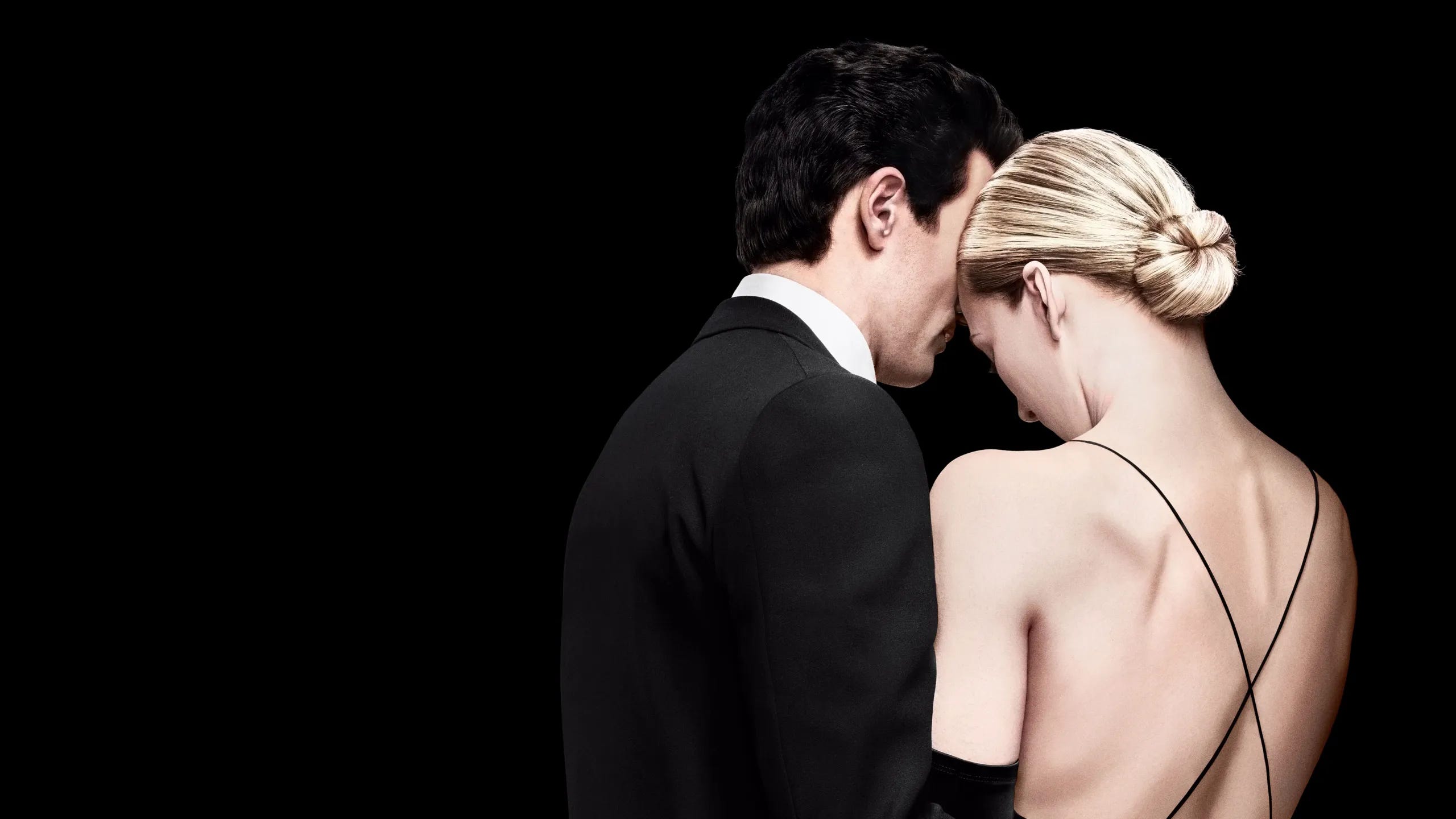
Like most of the TV that’s made these days, it was a visual smorgasbord of the conspicuous consumption of the rich and famous—ostentatiously set breakfast tables, gorgeous beach homes, endlessly expanding loft apartments, beautifully appointed rooms and stunningly tailored clothing. But the beautiful interior shots are contrasted with the absence of an inner life when it comes to the main characters, who appear to spend no time at all dwelling on ideas about the world or anything that extends beyond their own personal crosses.
What were JFK Jr.’s politics, beyond “generic Democrat”? What did he think about the world around him? The character portrayed in Love Story is motivated only by careerism. He fails the bar. He doesn’t like being a lawyer. Will his magazine, which only exists because he can trade on the family name, succeed? He has no thoughts beyond making sure his image lives up to the expectations of the family name.
A more pretentious show might have given us evidence that there was more to John than his need to be a Kennedy. But this show allows the viewer to contemplate the very real possibility that there just . . . wasn’t. The point wasn’t to make the world a better place; it was to be seen doing so.
There’s a scene early on in the couple’s relationship at the Kennedy family retreat in Hyannis Port where an elevated political discussion is being had during which everyone is meant to contribute something intellectually stimulating. Poor Carolyn can’t think of a thing to say! But the questions being posed by these titans of intellect were the kind of yes/no political questions you hear on cable news, things that would bore any sane person at a dinner party to tears. Maybe that reflects a lack of imagination on the part of the script writers, but I bet it was pretty close to the truth.
It’s like even in real life, these people weren’t great political minds; they just played them on TV.
Even in real life, these people weren’t really great political minds; they just played them on TV.
That’s why I love this show: It (perhaps inadvertently) exposed the pretensions of a myth that some haven’t yet realized is dead.
Carolyn and JFK Jr. become miserable in their marriage, but the show can’t quite explain why. After all, they have no real problems. Carolyn is miserable about the paparazzi attention so she refuses to leave the apartment, and refuses to get a job after leaving Calvin Klein before her wedding. She doesn’t want to go to parties with her husband, so he socializes without her. JFK Jr.’s magazine fails, so he is forced to consider running for the Senate. Poor things!
Like much of the culture today, the show feels like it was written by well off people imagining what problems the super rich might have—and failing. But in so doing, it reveals a deeper truth: While being born to the manor exposes you to a lifetime of media scrutiny, it also insulates you from the problems regular people struggle with, the kinds of things politics exists to improve. What would a Kennedy know about missed paychecks, about struggling to find a good job, about struggling to find dignity in a world that doesn’t recognize you or tell you you matter?
The replacement of public service with careerism is one of the defining problems in our elites today. It’s not that older political celebrities weren’t personally ambitious, of course. But there was a worldview there, a theory of the case about why you wanted to be the one to assume power, what you would do if you were given the chance. You had the idea that you were supposed to serve—not just yourself but the public.
The pure fact of a political family legacy like the Kennedy’s undermines that. There is always the assumption that you will run for office. It’s the family business. You’re assumed to not only want it but deserve it. It turns politics from public service into a personal one—capitalizing on your brand—much the way that social media has.
The replacement of public service with careerism is one of the defining problems in our elites today.
90’s nostalgia is fueled by the feeling that the world was a more innocent time back then, before cellphones and social media and the polarization we see in our media and politics. But the show proves the opposite: Someone as unimpressive as John F. Kennedy Jr. would have had a great shot at being president purely as a result of being a member of the closest thing America has to royalty.
But that’s much harder to imagine today. In 2024, RFK Jr.’s bid for the presidency got nowhere; it ended with a party change, from Democrat to Independent, and finally an endorsement of Donald Trump. Jack Schlossberg, JFK Jr.’s nephew, is a joke.
The show is proof that it’s we who are more innocent, or at least, less forgiving of the empty narcissism of the rich and famous. This is a populist age. We’re no longer cowed by celebrities. No one watches the Oscars. No one cares what the rich and famous think. Social media and reality TV have blurred the lines, exposed us to the truth: There’s no there there.
If Love Story is anything, it’s the tale of a bygone era in which being a Nepo Baby was enough. Beneath all that glitz and glam, there’s just . . . emptiness. Every dinner party you’ve ever thrown had better conversation than the Kennedys.
Who can resist a show like that?
One problem w so many of today’s celebrities is that so many, like JFKJr, have never done anything. Back in the day wasn’t a celebrity someone of high achievement? Nowadays you can be a spouse or a child of such, and that’s enough. The son of a top soccer player, the daughter of a famous lawyer, the niece of a presidential candidate, the wife of a royal, etc. People only distinguished by being related to someone.
I really like you Batya